Showing posts with label permeable sidewalks. Show all posts

Monday, August 22, 2011

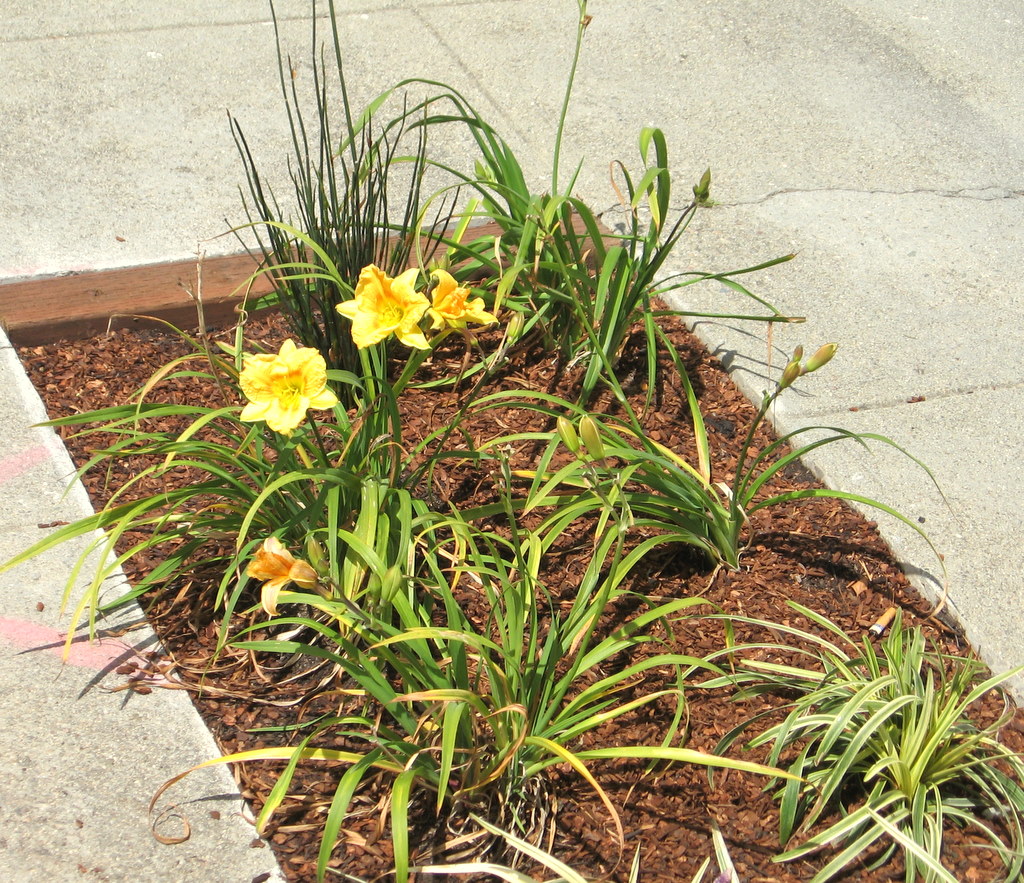
New Green Sidewalk Thriving: Lessons Learned


Photos: Michael Helquist

The concrete’s gone, the plants are in, purple spikes and yellow blossoms flash along the sidewalk. Once it starts raining, the permeable aspect – letting the rain water reach the aquifer instead of the sewer – begins. It’s green, healthy and just the start of what we can do together for a more sustainable future.

Any good project deserves reflection and evaluation. What went really well, what surprised us, what might we have done better, and how well did the city permit process work?

Planning

  • For a large project, get input from friends and neighbors – we held a Design Lab last fall to exchange ideas
  • Attend the city’s Grey2Green workshop
  • Enlist the help of a landscape architect* to prepare drawings to-scale, select materials and plants, order at wholesale outlets and guide the planting
  • Have several pairs of eyes read the city’s sidewalk use restrictions
  • Host an event to present plans (and a fundraiser, if needed, to cover costs)
  • Remember to plan for every stage – including removal of the dirt
  • Make it a work party – so much better with music and food provided

From Grey2Green

  • Expect concrete cutting and removal to cost at least $5.50 per square foot
  • Schedule the concrete work to coincide with street cleaning hours and avoid the risk of damaging vehicles parked nearby during demolition
  • Expect to remove a lot of dirt – it will be sand or clay
  • Prep the required edging a few days before – the workday will be busy enough
  • Place new plants with soil and mulch one inch below the sidewalk or curb surface – this will help contain the rain water and irrigation

After the Planting

  • Celebrate and post photos online, thank everyone
  • Depending on the season and weather, water frequently to get plants thriving

Now We Know

  • Really do plan for dirt removal – we thought of everything but this
  • Read the city regs one more time – especially about the edging & courtesy paths
  • Do the prep work with the edging materials ahead of time – we rushed to saw 4"x6" beams and drill holes right before the workday started
  • Keep at the fundraising – unexpected costs will occur
  • Work can proceed in two phases – we left another stretch of sidewalk for the future

Working the System

  • City staff are friendly & enthusiastic,** but sometimes difficult to contact initially
  • You can’t get begin the work without a permit; allow 2-4 weeks
  • An initial inspection is required
  • Be sure to get a final inspection – the city sign-off increases liability protection
  • City website – DPW Bureau of Urban Forestry -- needs to be more user-friendly

How Much Did It Cost?

  • We removed 160 square feet of concrete at $5.50 per square foot
  • We purchased almost 100 plants and shrubs – we bought more mature plants
  • Plants and soil were obtained from a wholesale firm through our landscape architect
  • Total cost: approximately $3400
  • Total donations: approximately $3400***

Was It Worth It? Stop by Turk & Lyon and then start plans for your own Grey2Green project

* James Munden, senior landscape architect, at Marta Fry Landscape Associates/MFLA Studio, made all the difference to the success of this project

** Thanks to Markos Major, DPW Bureau of Urban Forestry for getting us through the permit process

*** Huge thanks to major donors Rev. Sally Bingham; Oz Erickson, President of the Emerald Fund and all those who supported this project from start to finish and at points in-between

Note: article first published at Green Turk & Lyon.


Sunday, July 24, 2011

Green Turk & Lyon L(a)unch Saturday July 23, Huge Success


More than 40 people made San Francisco a greener city Saturday by turning grey to green at the corner of Turk and Lyon in NOPA. Friends, neighbors, and members of St. Cyprian's Episcopal Church came together for a long day in the dirt -- digging out sand and, unexpectedly, clay from below the newly exposed concrete sidewalk strips, adding 40 bags of new soil, settling in nearly 100 plants, and topping the new beds with fir bark. From start to finish a solid 8 hour day for those who remained to celebrate the tapping down of the last Berkeley sedge. A green lunch fueled volunteers mid-day along with live music.

St. Cyprian's Church and NOPA neighbors initiated the project last year during a Design Lab that developed proposals for how the church and community might work together more closely on neighborhood projects. One of the ideas was to green the sidewalks, making the corner where St. Cyprian's is situated more inviting and sustainable. In the months that followed students from the University of San Francisco undertook research of the city's permeable sidewalk permit process. This spring the Green Turk & Lyon Project was launched to take the project to completion.

Neighbors pitched in right away. James Munden, Senior Landscape Architect with Marta Fry Landscape Associates, developed drawings of how the Turk and Lyon might look a bit more green. Intrigued with the possibilities, more than 60 people contributed to a fundraiser at Chile Pies restaurant in May while others donated in the following weeks. St. Cyprian's completed the city's application process, paid the permit fee, and received permission to get the project underway in mid-July. Last Saturday volunteers pushed the project to completion.

Of the many who made the Green L(a)unch possible, special thanks to Marta Fry Landscape Associates, Duncan Ramsay for the terrific poster image, The Wigg Party, Yerba Buena Community Accupuncture, John Dennis, San Francisco Recreation & Parks Department, Department of Public Works Bureau of Urban Forestry, the California Jug Band Association, Erich Sylvester, Will Greene, and Kelsey Schleusener.

Tuesday, May 31, 2011

Turk & Lyon Closer To A Greener, Friendlier Future


Green Possibilities for Turk Street near Lyon
Image: James Munden, Marta Fry Landscape Architects

Green Turk & Lyon Fundraiser at Chile Pies Photos: Dale Danley

Jarie Bolander (left), NOPNA President, Recalling First Contact with Honoree
(We worked it out)

Thanks to everyone who joined the party and fundraiser at Chile Pies (& Ice Cream) last week -- all 60 of you and those unable to attend who also donated to the Green Turk & Lyon project. Your support helped raise $1100 that will bring greener sidewalks, benches and bike racks to the southeast corner of Turk and Lyon.

For me the best part of the evening was being among so many friends and advocates who contribute every day to a better neighborhood, district and city. We are all privileged to work together. An occasion like this is always the result of help and contributions from many people. Special thanks to --
  • Supervisor Ross Mirkarimi for designating me District 5 Person of the Month for June and especially for all his efforts to support individuals and groups in this amazing district
  • Vallie Brown, Ross's legislative aide, who takes good ideas and guides them to implementation
  • Trevor Logan, owner of Green Chile Kitchen and Chile Pies. His generosity and support of the fundraiser has been remarkable
  • Kalie Nickless, manager of Chile Pies, who made all arrangements incredibly easy
  • James Munden, neighbor and landscape architect with Marta Fry Landscape Architects, whose images of the Green Turk & Lyon project inspire us to create a model for green permeable sidewalks in NOPA
  • The members of St. Cyprian's Episcopal Church, led by Pastor Will Scott, for their ongoing engagement with the community and eagerness to transform the sidewalks along the church property for a green neighborhood respite
  • NOPNA, the San Francisco Bicycle Coalition, Sunday Streets, Walk SF, Fix Masonic and NOPA VELO for co-sponsoring the fundraiser
Next steps for the project will be a community meeting in July to review designs, workplans, and a timeline for removing the concrete and enlivening the Turk and Lyon corner. Date and time will be posted here on BIKE NOPA. More detailed information is available here. Take a look at the corner this Saturday night, June 4, before a special concert, an Evening of Song, at Cyprian's.

Interested in volunteering or want more information?: greenturkandlyon@gmail.com
To donate to the project: so far we're set up to accept checks made out to St. Cyprian's Episcopal Church; please write on memo line: "Turk & Lyon Project". All donations will go to a separate Turk & Lyon account. Thank you!

Saturday, May 14, 2011

Pies for Parklets -- You're All Invited to Celebrate and Bring Some More Green to our City


Envision a greener Lyon Street at Turk along exterior of St. Cyprian's Church
Images: James Munden, Marta Fry Landscape Architects

Creating community with a greener, more sustainable space

Dear BIKE NOPA Friends, Neighbors, Colleagues,

Which do you like best when it comes to pies? Sweet or savory? Peach blueberry or green chile apple? Or perhaps an organic pinot noir, a chocolate stout, or ecco organic coffee? Take your pick at this upcoming event and help green the corner of Turk and Lyon.

On May 25, NOPNA, Sunday Streets, St. Cyprian’s Church and the San Francisco Bicycle Coalition will co-host a community celebration of an honor that has come my way, and, more importantly, to kick-off a plan to make our neighborhood greener and more sustainable.

Supervisor Ross Mirkarimi has named me the District 5 Person of the Month for June. In his words:
Michael has contributed to so many organizations in the district and citywide, including the North of Panhandle Neighborhood Association, Fix Masonic, the San Francisco Bicycle Coalition, Sunday Streets, NOPA VELO, and, most recently, the community development work of St. Cyprian's Episcopal Church. The district and the city are fortunate to reap the benefits of his efforts. Michael wants to celebrate this honor with a community fundraiser to benefit a new streetscape project for Turk and Lyon streets. I encourage everyone to join in.
A huge thanks to Supervisor Mirkarimi. I want to share it with all of you who do so much to make this a great district.

Let’s meet up and make something very cool happen at the same time: Raise some bucks to remove concrete slabs of sidewalk and replace them with trees and shrubs, benches and bike racks. Let's transform the SE corner of Turk and Lyon and create community at the same time. Neighbors have been meeting at Turk and Lyon since last year about how to make the corner greener and more sustainable. Now they're ready to share the vision and engage the community even more in a design that benefit everyone.

Putting it all together:

Wednesday, May 25, 5:30 to 7:30 pm
Chile Pies (& ice cream), 601 Baker @ Fulton
Free treat with each $15-$20 donation (slice of pie, drinks and more)
Live music in the works
All proceeds will fund the Green Turk and Lyon project

Questions? please contact greenturkandlyon@gmail.com
Can’t attend but want to donate? Checks payable to St. Cyprian’s Episcopal Church, Green Turk and Lyon account, 2097 Turk, SF 94115.

Please save the date. Stop by for good cheer, check out the other renderings, and help make D5 even greener. The fundraiser will be followed in the weeks ahead with neighborhood meetings and then the good stuff: replacing concrete with soil, stones and native plants, benches and bike racks.

Check out the concerts and events at Cyprian's, the new venue in town, at Turk and Lyon where St. Cyprian's Episcopal Church has been an active in the community since 1960.

Thank you, Chile Pies!

Thursday, November 11, 2010

Masonic Boulevard Plan Promises Park and Plaza to Make Masonic Neighbors Proud


Mini-park at Geary and Masonic: a forlorn bus stop of a green space

That's a lot of concrete and asphalt for a mini-park to balance

From the street it's all about hard surfaces and vehicles crowding along all three sides

New Masonic Boulevard plan will broaden the park, add trees & amenities
Image: San Francisco Planning Department

Right where Masonic and Geary tangle their traffic on the south side sits a little triangle of a park that really needs some attention and care. A grove of hardy New Zealand Christmas trees adds a touch of green to the otherwise all-concrete plaza. A bus shelter clings to Geary and offers some respite from the wind blasts from the west. No one has lunch there. No one says, "Meet me at the plaza." Entering or leaving the often dark and gloomy space is not for the faint of heart: double-checking the traffic flow is a must. But it doesn't have to be this way, and it won't once the city adopts the Boulevard design for the Masonic corridor.

As part of the Masonic Traffic Design proposal, the uninviting triangle at Masonic and Geary will be transformed into a welcoming spot for strollers, Muni riders, shoppers and anyone needing to stretch their legs after too many mahi mahi tacos at Hukilau across the street. Concrete will give way to trees, shrubs, and grasses and permeable surfaces that will cover 11,000 square feet. Benches will permit a rest. And public art will give the site the distinction it now severely lacks. Crosswalks will be upgraded and the street will be re-paved. Vehicle access to residences and businesses along the short stretch of westside Masonic will remain, but a quieter space and more attractive view will greet merchants and customers, homeowners and renters.

Strategic plantings will take advantage of the wind shadow created by the buildings on the west side of Masonic, and new trees will be selected to help block the wind. A full median of newly planted trees and addition street trees along the sidewalk will complement the new plaza. The greening of Masonic can begin right here.

City staff working on the Masonic Traffic Calming Project will complete a final report -- including the design for a revitalized plaza and art park -- by the end of December. Then Masonic area neighbors will get another chance to endorse a new green transportation corridor from Geary to the north and the Panhandle to the south.

For other stories in the A Better Masonic series, check here.

Friday, July 30, 2010

Seen While Walking: Sidewalk Safety Repair


Tree roots buckled this sidewalk of Baker at Fell but no longer

The North Panhandle's mature trees often buckle the sidewalks, creating hazards for the unwary or distracted stroller. One property owner on Baker Street at Fell decided to not risk liability for injuries and replaced the concrete surrounding two of the large street trees fronting the building.

It's always an improvement to have smoother, safer sidewalks, but the neighborhood would benefit from more permeable sidewalks to absorb storm water runoff. Using the sidewalk replacement in these photos as examples, several feet on either side of the trees could have been opened for additional planting or filled with loose materials instead. One recent example of a new formulation for sidewalks can be seen at the Zygmunt Arendt House at Broderick and Golden Gate (previously reported here). A residential model of open sidewalk space is in place at Broderick and Hayes.

Friends of the Urban Forest (FUF) will be sponsoring a street-tree planting in NOPA on July 31st, and all the new trees will be welcome. Property owners will get the benefit of a subsidy to cover cutting and removing the concrete for the new trees and for the trees, but the city currently levies an additional fee for anyone who wants enlarged basins. A fee waiver here could greatly increase green space and return rainwater to the aquifer at relatively small cost.


Friday, July 2, 2010

Five More Days to Get a Street Tree: July 6 Deadline for Friends of the Urban Forest Planting in NOPA

How about a New Zealand Christmas Tree to make your block greener?
Photo: Friends of the Urban Forest

This empty spot all ready for a tree

Prime sites for greener sidewalks (and no more liability)

On July 31st Friends of the Urban Forest (FUF) staff and North Panhandle neighbors will continue a much-appreciated tradition: they'll plant street trees along neighborhood streets.

Soon after I first moved to NOPA thirteen years ago, I got involved with one of the recurring campaigns to get more trees planted. It was a lengthy process of recruitment and what seemed like tons of paperwork -- all hard copies to collect and copy and mail -- to reach the point where we had enough interested residents to qualify for a community planting. Once thirty-some sites were verified and prepared, a group of neighbors and other volunteers moved from one open spot to another planting the selected trees. Today when I walk or bike down Grove Street near Baker I appreciate how large the trees have grown alongside the Pacific Primary School (the new "Orange Sun" building) that I helped plant. And I know neighbors throughout NOPA have those same connections to the greening of our streets.

Today a great many of NOPA's blocks have empty spots where trees could be, and several have open holes where trees once stood. Most of these are eligible for new trees, and neighbors have until Tuesday evening, July 6th to apply* for a tree and be part of the July 31st planting. The time has seldom been better, at least as far as the cost involved. FUF has obtained enough funding to subsidize more than 80% of the planting costs, including permits, cutting out the concrete areas, selecting the type of tree, and planting it.

Greg Harrell-Edge, FUF Community Outreach Coordinator, told BIKE NOPA that he and other staff are doing their best to get as many people enrolled in the planting as possible. He added that trees can also be planted in front yards if within three feet of the sidewalk. They were able to reach the required minimum number of confirmed plantings once Trader Joe's agreed to plant trees along the store's Masonic Avenue sidewalk.

For more information on planting street trees in the NOPA area:
  • Friends of the Urban Forest website
  • Greg Harrell-Edge, greg@fuf.net or call 415 561-6890, ext. 101


Friday, June 18, 2010

Jean Green, New NOPA Neighbor and Zygmunt Arendt House Resident: Now She Has "Peace and Empowerment"


Jean Green, 6th person and 1st woman to move into new Arendt House

Bioswale, garden and patio all ready for Grand Opening

A green habitat for an environmentally green facility

"Today I'm celebrating. It's been 119 days since the day I moved here. I no longer have the stigma of homelessness. I have peace and empowerment." Jean Green is one of the North Panhandle's newest neighbors, and she couldn't be more pleased to have joined the community of formerly homeless seniors at the Zygmundt Arendt House at the corner of Golden Gate Avenue and Broderick Street. Thursday afternoon Green celebrated the Grand Opening of the Arendt House with a few hundred others, including Supervisor Ross Mirkarimi, staff from the several city agencies, representatives from the contractors and funders, house residents, and neighbors.

Green's story exemplified the importance of providing affordable homes to those who need assistance. She told the other celebrants that she lost her home in 2007 and had to move into a homeless shelter. "I was born in San Francisco and I didn't want to leave the city, but I also didn't want to be in a shelter with so many troubled people." Only her resolve kept her going. "I tried to stay strong. I had to focus on keeping my health and my sanity." Just when Green believed she had no choice but to leave the city, she saw a notice for the Arendt House. She qualified and became the sixth resident and first woman to move into the facility. After the unsettling time at the shelter, Green said all she heard once she settled in was quiet. "It was so quiet, I could sleep, and I was so happy."

Green had another reason to celebrate on Thursday. She graduated from the desk clerk training program offered by the Community Housing Partnership, an owner of the Arendt House along with the Tenderloin Neighborhood Development Corporation. "Today I have hope and I'm optimistic."

At first several North Panhandle neighbors were hesitant, or outright opposed, to the idea of new housing for homeless seniors in the area. Some resisted the original modern architecture and design proposed for the building. Through negotiations with the owners and architects, a new design was developed that more readily reflected the scale and appearance of the surrounding buildings. Others objected to the high proportion of service agencies and supportive housing already existing in NOPA compared with other neighborhoods. And neighbors were reluctant about who the residents would be and how they would affect the existing community.

Doug Shoemaker of the Mayor's Office of Housing commended the North Panhandle for bring its concerns to the city and its willingness to find a solution. "The experience this neighborhood had in coming to accept this project is one we need to take to other neighborhoods." Supervisor Mirkarimi added to the sentiment. "This is a model for other neighborhoods on how to work with the city. It can work and we can be proud of the end product."

Today the Arendt House consists of an attractive exterior with references to the nearby Victorian and Edwardian structures. It provides individual studios, each with a full bathroom and kitchenette. The project includes a courtyard garden, landscape roof deck, and a community room. The complex also incorporates several green building elements including a rainwater retention system with a backyard bioswale and the neighborhood's most extensive permeable sidewalks along Broderick and Golden Gate, as reported here earlier.

The real selling points to a project like the Arendt House are the residents themselves. Michael Chao, Project Manager for CHP, told BIKE NOPA, "This is so rewarding, more than I expected, because the tenants tell us how happy they are to be here."

Scenes from the Grand Opening Thursday:


Tuesday, January 5, 2010

NOPA's Greenest, Most Sustainable Building With Its Cool Permeable Sidewalks


Zygmunt Arendt House

Golden Gate Avenue side with permeable landscaping and recycled granite

Broderick Street side, close-up, ready for landscaping

NOPA starts the New Year with the imminent opening of its newest and largest development and a first in the neighborhood to apply extensive green construction principles. The Zygmunt Arendt House is a 47 unit affordable housing project at 850 Broderick that anchors the intersection with Golden Gate and extends downhill nearly half way. Although the price tag for the privately-funded development is high at more than $16 million, the building exterior pleasantly recalls the nearby Victorian and Edwardian architecture and promises to enliven a long dormant corner of the neighborhood. Construction began more than a year ago and is expected to be completed early in 2010. The building features several sustainable, “green” enhancements including:

· An energy-efficient structure, or “envelope,” and mechanical systems

· Photo-voltaic rooftop panels

· Planter boxers and open sidewalk areas that retain storm water runoff

The Arent House benefits from the environmental standards set by the city in 2005 for new low-income housing. The green construction elements will establish the Arent House as the most sustainable and “greenest” building in NOPA.

Before focusing on one sustainable aspect of NOPA’s newest residential project – the impressive commitment to “permeable sidewalks” – let’s take a look at who our newest neighbors will be. The Zygmunt Arendt House will serve formerly homeless elders, providing them with on-site support services and skills training. The undertaking is a joint development project of the Community Housing Partnership (CHP) and the Tenderloin Neighborhood Development Corporation. CHP is a San Francisco-based non-profit with a clear focus on creating and implementing “solutions to homelessness,” and the organization has set ambitious goals for the Arent House:

  • Ensure that 97% of clients retain permanent housing
  • Help 75% of residents seeking jobs to find work
  • Develop staff so 50% are former homeless people

Project staff is committed to being good North Panhandle neighbors as well. Several members introduced themselves and briefly described their work at last November’s meeting of the North of the Panhandle Neighborhood Association (NOPNA).

Stop by the construction site of the Arendt House now to watch the installation of NOPA’s largest expanse of concrete-free, permeable sidewalks. These cut-out areas along the Broderick and Grove sides of the building drain stormwater run-off and reduce the burden on San Francisco’s water treatment plants. They also create much-needed open spaces for trees and plants along our streets and sidewalks. Even covering the concrete-free spaces with loose stones or other natural or man-made materials opens the soil to air and water.

Other than the skinny sidewalks of Divisadero Street, NOPA is fortunate to have many broad pedestrian stretches especially along its north-south streets. Most of these could easily accommodate their own permeable segments, perhaps as extensions to existing cut-outs for new and existing street trees. Find out how to green your sidewalk at PlantSF and look for future BIKE NOPA posts on permeable sidewalks.